An Dún
IMMA Dublin
15 Feb – 15 Sept 2024
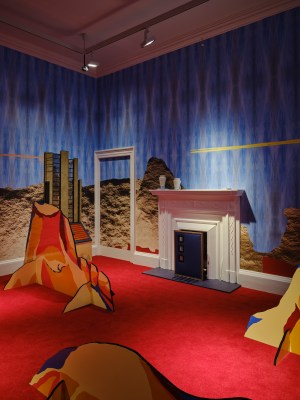
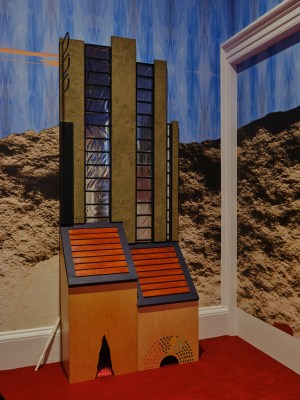
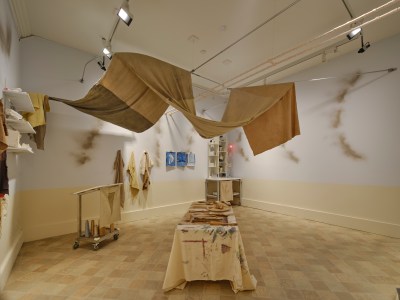
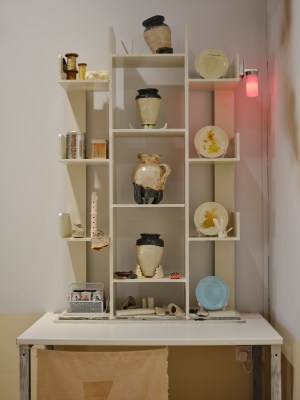
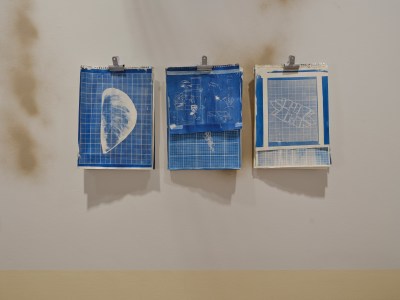
Opening on 15 February two new works commissioned by IMMA are presented as part of the exhibition Self-Determination: A Global Perspective– Turkish artist İz Öztat site-specific installation, Rest, and a new multi-narrative environment, An Dún, by Belfast based Array Collective.
An Dún is a new multi-narrative environment by Array Collective. Across immersive spaces a complicated and messy understanding of statehood and citizenship is unearthed. Ideological, topographical and political plans are fashioned and accumulated inside a site of destruction and construction. Resting outside of time, we hear echoes of our past, present and future in ever-changing failed experiments of hope. The ‘good room’ deep within a cave, stages rituals of citizenship. Behind the scenes, plans are cooked up and mistakes are made, amidst the labour of daily life. As An Dún shifts and repositions, occupying unsteady space between reality and fiction, care and compromise endeavour to make a shared existence liveable.









Self-Determination: A Global Perspective
IMMA Dublin
28 Oct 2023 – 21 Apr 2024
An Comhthéacs Domhanda. IMMA has commissioned new works by Array Collective, Jasmina Cibic, Declan Clarke, Minna Henriksson and İz Öztat; alongside co-commissions by Banu Çennetoğlu, and Larissa Sansour and Søren Lind. The commissions bring together international artists to critically reflect on the outcomes of the self-determination movements, shedding light on the successes, failures, and unanticipated consequences. The culmination of a three-year research project, this exhibition focuses on the new nation-states that emerged in the wake of the First World War, exploring the role of art and artists in relation to the expression of national identities, nation-building, and statecraft.
This exhibition brings together a range of Irish and international works, both modern and contemporary, that illuminate the shared experiences of the new states. In 1919, Arthur Griffith, writing from Gloucester Prison, urged his colleagues to ‘mobilise the poets’ to help make Ireland’s case for independence on the international stage. Griffith’s letter acknowledges the role of art and culture in developing international solidarities and justifying Ireland’s right, among other small nations, to ‘self-determine’. It also highlights the new possibilities for artists in the early twentieth century, an era of collapsing empires and seismic geopolitical shifts, to articulate and enact radical modern and democratic principles.
This exhibition explores some of the common cultural strategies that emerged across many of the new nation-states including Finland (1917), Estonia (1918), Latvia (1918), Poland (1918), Ukraine (1917), Turkey (1923), and Egypt (1922), against the backdrop of the international movement towards self-determination, most famously articulated by Woodrow Wilson at the Paris Peace Talks in 1919. How did diverse countries understand the formation of the new state? How did their artists and poets imagine it? How was this situated within an international context? And how do contemporary artists today reckon with the legacies of this period?
Each of the new states produced its own cultural complexities, with its own traditions, histories, and industries to be reimagined in line with the new imperatives of modernity. Self-Determination: A Global Perspective explores common strategies and methodologies developed by artists, cultural practitioners, and others invested in the formation of a new state in the first half of the twentieth century.
For this major international exhibition, IMMA will work in dialogue with a range of partnering museums and institutions worldwide, drawing on the expertise and specialist knowledge of a network of advisors and borrowing key works from national and international collections. A particular highlight is the cooperation of the National Art Museum of Ukraine (NAMU), who are sending major works from Kyiv to Dublin for the exhibition.


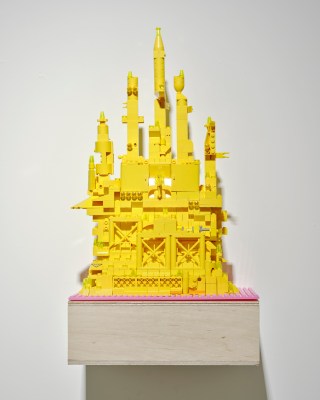
The Druithaib’s Ball
Turner Prize
Herbert Art Gallery & Museum
29 Sep 2021 – 12 Jan 2022
Array are a collective of artists and activists rooted in Belfast. They create collaborative actions in response to social issues – for example, around language, gender and reproductive rights – affecting themselves, their communities and allies. Array reclaim and question traditional identities associated with Northern Ireland in playful ways that merge performance, protest, ancient mythology, photography, installation and video.
The Druithaib’s Ball, new work for Turner Prize 2021, has been realised twice over. In Belfast it was a wake for the centenary of Ireland’s partition in the Black Box (grassroots venue), and was attended by semi-mythological druids along with a community of artists and activists wearing hand-made costumes.
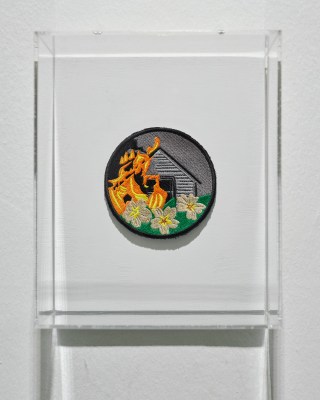
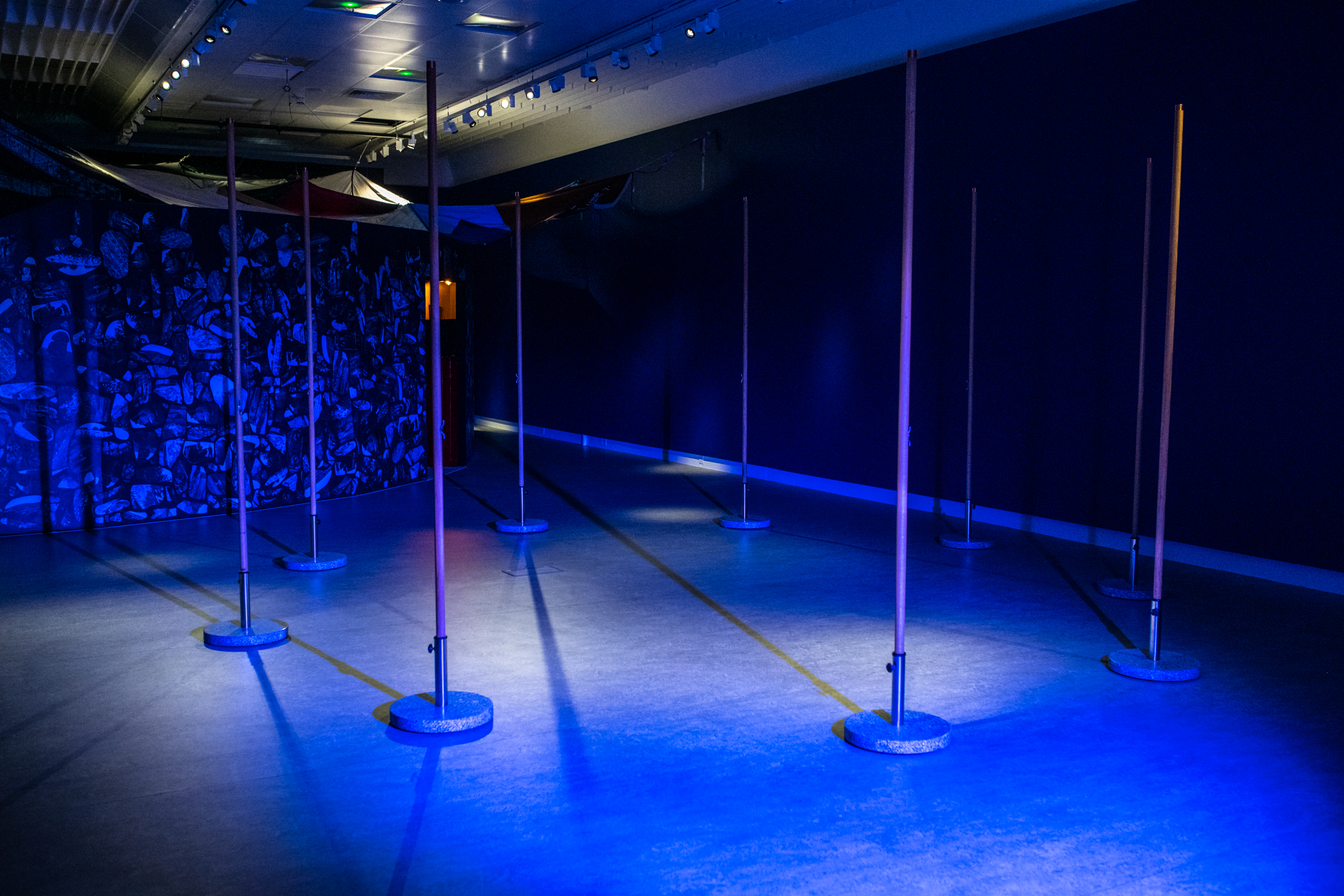
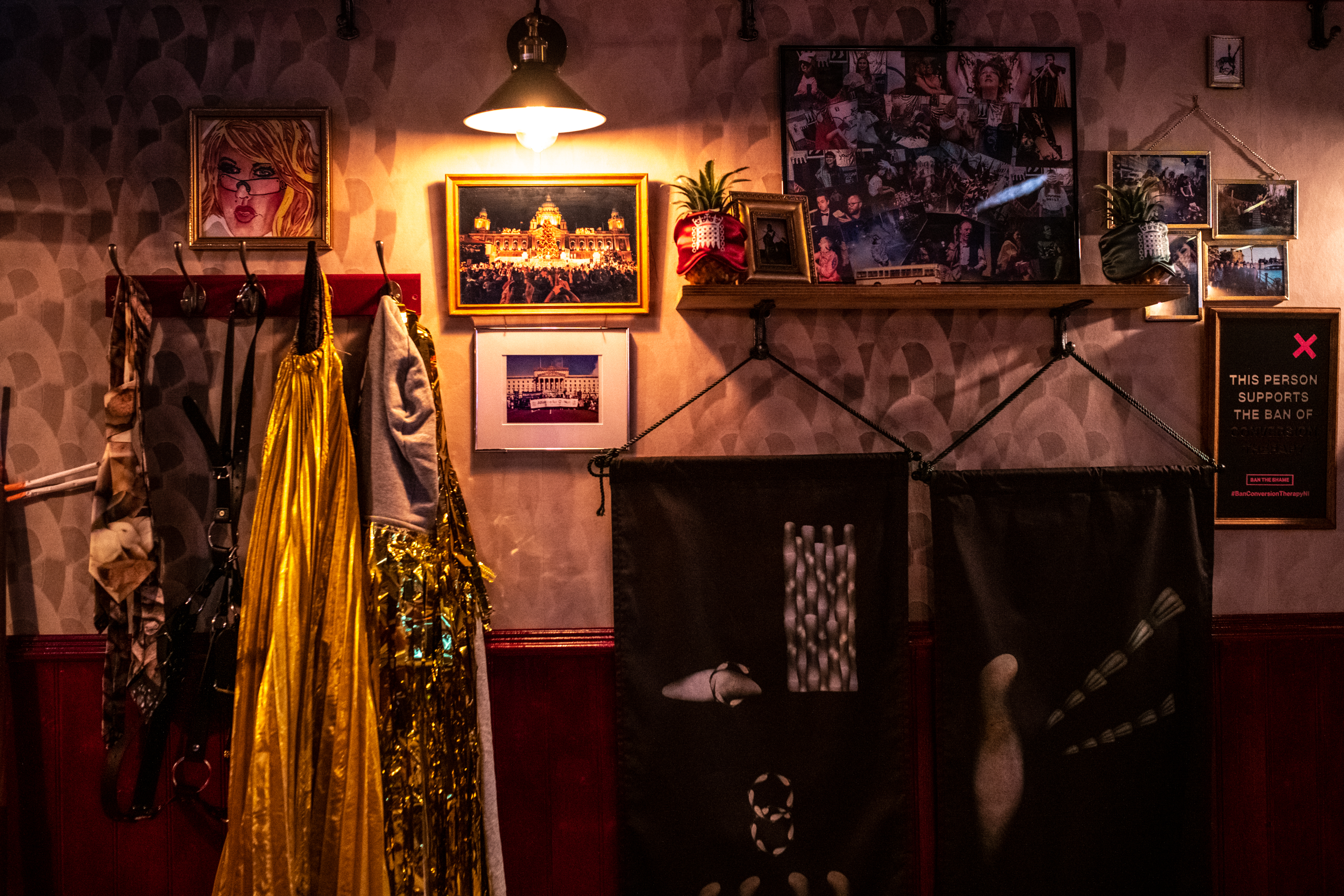
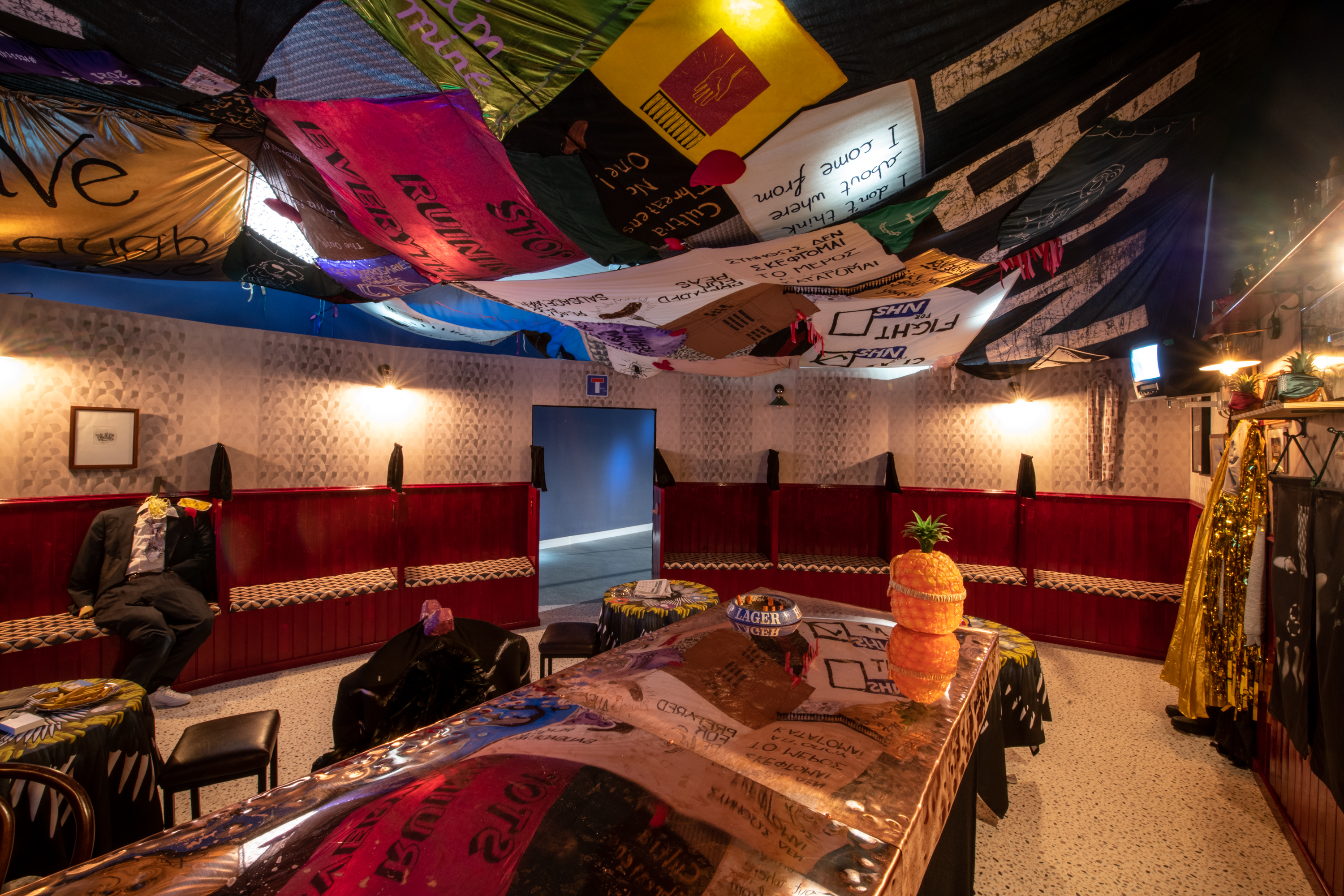
At the Herbert, the event has been transformed into an immersive installation. An imagined síbín (a ‘pub without permission’) hosts a film created from the Belfast event, and a TV showing Northern Ireland Screen’s Digital Film Archive. A large canopy styled from banners provides a floating roof. The síbín is approached through a circle of flag poles, that references ancient Irish ceremonial sites and contemporary structures, and is illuminated by a dawn-to-dusk light.
Array invite us into a place of contradictions where trauma, dark humour, frustration, and release coexist. It is a place to gather outside the sectarian divides that have dominated the collective memory of the North of Ireland for the last hundred years.
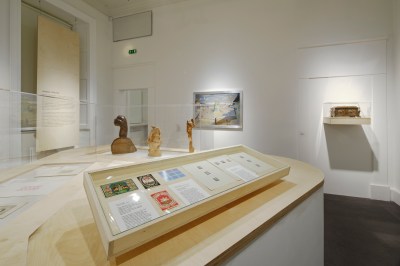
Array have also intervened in the Herbert’s collections, inserting an etching of The Druthaib’s Ball, into the Old Masters Gallery and displaying banners on ‘designated days’.
Array Collective are: Sighle Bhreathnach-Cashell, Sinéad Bhreathnach-Cashell, Jane Butler, Emma Campbell, Alessia Cargnelli, Mitch Conlon, Clodagh Lavelle, Grace McMurray, Stephen Millar, Laura O’Connor and Thomas Wells.
Is comharghrúpa ealaíne agus gníomhaíochais é Array atá fréamhaithe i mBéal Féirste. Cruthaíonn siad taispeántas comhoibríoch mar fhreagra ar cheisteanna sóisialta a bhaineann leis an ghrúpa, le pobal s’acu agus a chuid comghguaillí — mar shampla, cearta teanga, comhionannas inscne agus cearta inscne agus atáirgthe.
Úsáideann Array taibhealaín, léiriú, agóid, miotas ársa, grianghrafadóireacht, suiteán agus físeán i modh grinn chun féiniúlachtaí traidisiúnta a bhaineann le Tuaisceart na hÉireann a athslánaigh agus ceistigh. Is sealbhóirí na dtraidisiún cultúrtha iad.
Is saothar nua é The Druithaib’s Ball’, faoi choinne Duais Uí Tornóir 2021. Chruthaíodar an saothar faoi dhó. I mBéal Feirste, tórramh a bhí ann ar son an cothrom céad bliain de chríochdheighilt na hÉireann. Sa Bhosca Dubh a bhí an bál, ionad cosmhuintire i lár na cathrach. D’fhreastail draoithe páirtmiotaseolaíochta ar an chóisir, chomh maith le baicle ealaíontóití agus gníomhaithe le éadaí lámhdheánta orthu.
Ansin, i Gailearí Uí Hoireabaird, rinne Array suiteán tumthach as an imeacht. Chruthaigh siad síbín samhalta. Is teach tábhairne mídhleathach é an síbín agus óstálann sé an scannán a rinne Array as an imeacht i mBéal Feirste. Tá teilifís ann chomh maith a thaispeánann gearrthóg ón gCartlann Digitech Fís Tuaisceart Éireann. De bhratacha atá ceannbhrat mór déanta, agus obraíonn sé mar díon foluaineach. Ar an mbealach isteach go dtí an síbín, téimid tríd ciorcal déanta as chrann brataí, ag déanamh tagairt do láithreacha deasghnácha Sean-Ghaeilge agus struchtúr comhaimseartha, agus báitear an áit i solas na gréine ó dhubh go dubh.
Cuireann Array fáilte romhaibh go dtí an áit neamhréitithe, an áit seo ina mhaireann tráma, greann dubh, frustrachas, agus faoiseamh le chéile. Áit ina bhfuil daoine ábalta bailigh le chéile, gan an scoilt sheicteach a bhfuil go fóil i gcroí agus in aigne an phobail i Tuaisceart na hÉireann le céad bliain anuas.
Fágann Array lorg s’acu i mbailiúchán Uí Hoireabaird chomh maith. Chuir siad eitseáil den ‘Druithaib’s Ball’ isteach i Gailearaí na tSean-Mórealaíontóirí agus beidh bratacha ar taispeáint ar ‘na laethanta socraithe’
Is muidne, le meas. Is muidne Array: Sighle Bhreathnach-Cashell, Sinéad Bhreathnach-Cashell, Jane Butler, Emma Campbell, Alessia Cargnelli, Mitch Conlon, Clodagh Lavelle, Grace McMurray, Stephen Millar, Laura O’Connor and Thomas Wells.

As Others See Us
Collaborate!
Jerwood Arts, London
2 Oct- 15 Dec 2019
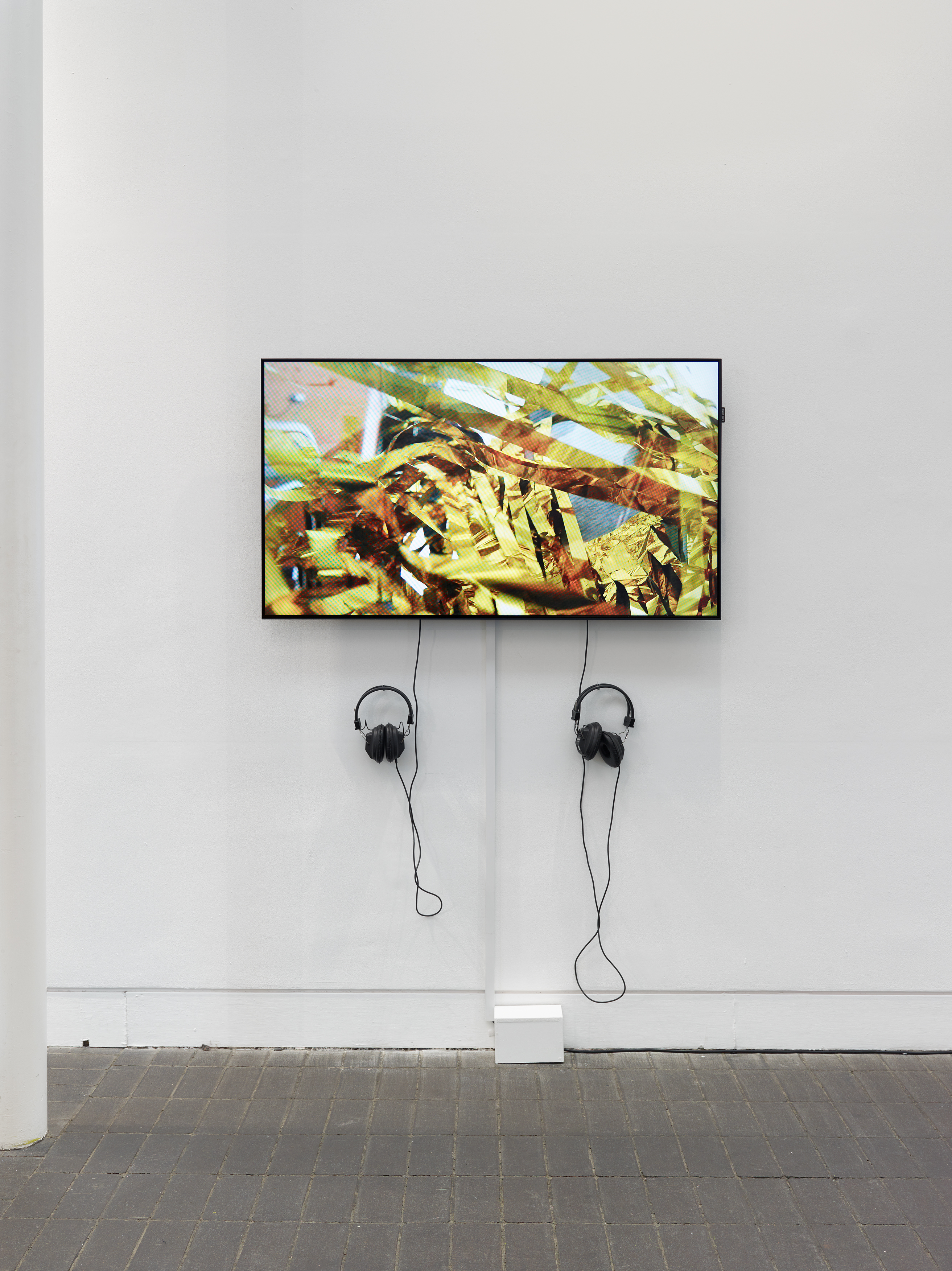
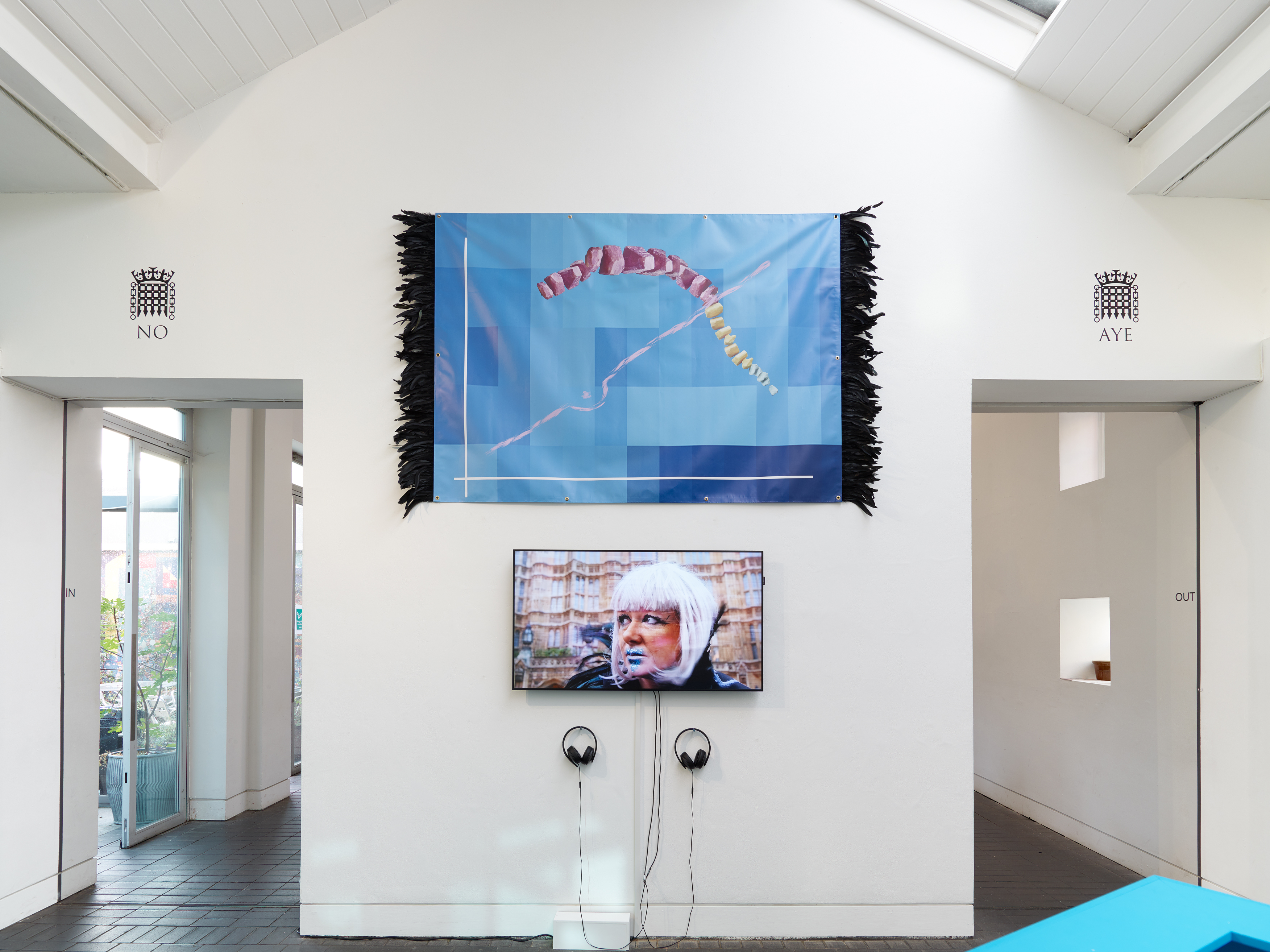
Array is a collective based in Belfast which creates collaborative actions in response to socio-political issues affecting Northern Ireland. Their installation, As Others See Us, is centred on three fictional characters drawn from the pre-Christian myths and folklore of ancient Ireland: ‘The Sacred Cow’, ‘The Long Shadow’ and ‘The Morrigan’. These characters have shape-shifted through crowds at Belfast Pride and the banks of the River Thames in London and have been documented through film, performance, sculpture and textiles. Array hosted a symposium at Jerwood Arts, opening the discussion around activist work in Northern Ireland to like-minded artists and activists from different generations to directly respond to the issues raised in the work, exploring tensions and possible resolutions.




Artists Make Change
A presentation for a-n Artist Council’s project Artists Make Change by Array Collective. Members of Array Collective have put together a presentation which highlights their campaign work, and the use of art practice & art spaces, platforms and structures to bring attention to the process of making change via activism and protest in a search for fairness and to combat inequality. Artists Make Change is a 12 month R&D project designed and delivered by the Artist Council of a-n The Artist Information Company – exploring ways for artists to make change, and advocating for the role of artists and a society that understands the value of artists.
 Grace McMurray